


Beloved horror mastermind Stephen King has been renowned for his work since his first novel, “Carrie,” in 1974. A large number of his most inventive novels have made it to the big screen, including one of his more recent works of fiction, “If It Bleeds.”
Published in April of 2020, “If It Bleeds” features four short stories, the first of which being “Mr. Harrigan’s Phone.” The Netflix Original film adaptation, written and directed by John Lee Hancock, was released on Oct. 5.
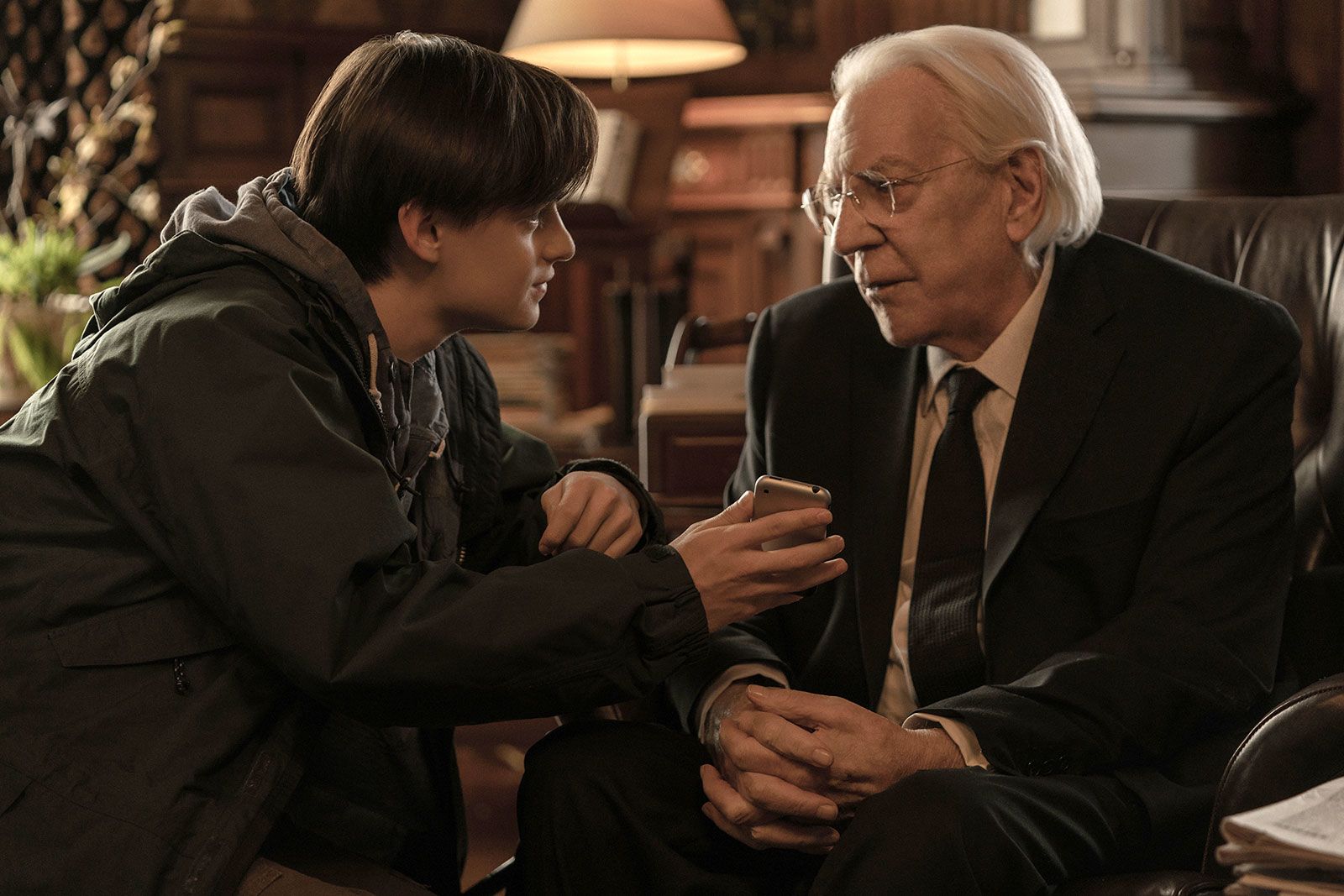
An old man named Mr. Harrigan (Donald Sutherland) hires a young boy, Craig (Jaeden Martell), to read stories to him as his eyesight gets worse with age. As their relationship progresses through the years, Craig begins to view Mr. Harrigan as a vital mentor and father figure in the midst of his lonely childhood. Despite being a ruthless old man stuck in his ways, Mr. Harrigan takes a liking to Craig and sacrifices his stubbornness when he is gifted a first-generation iPhone. After his death, he is able to communicate with Craig via his phone and meddle in his life beyond the grave.
A story of the modern age, King demonstrates his ability to write for any era. In an interview with Tudum, King discusses his inspiration for this 21st-century tale.
“I’d always wanted to write a story about somebody who got buried with a phone,” King said. “The first thing that I thought about was the old thing about some guy who’s going to be buried alive and he has a phone, [he’s] put in a casket, and it rings or something like that. But you can update that for iPhones.”

Because of the intense detail with which King writes each of his works, their film adaptations typically leave a great chunk of the plot to be desired by audiences. His mind is unlike any other author, churning out dense, original works of literature consistently since the ‘70s. And while movie magic brings his stories to life, they often lack the richness King brings to each page.
However, “Mr. Harrigan’s Phone” aligns extremely closely with the novella, following almost every event and plot detail from beginning to end. It is brief — less than 100 pages — and relatively straightforward, which made for a smooth transition to film. On top of that, King acted as an executive producer on the film and recalls having zero issues with the script, cast or direction.
“I had script approval, I had actor approval… but how are you going to turn down Jaeden Martell and Donald Sutherland?” King recalled when asked about his role as executive producer on the film. “It’s a no-brainer… I feel some responsibility to do whatever I can to keep an eye on the project and say very gently, ‘I think this might not be the right way to go.’ But with Mr. Harrigan’s Phone, I never had that happen. It’s a scary story, but it’s… quiet. I like that.”
Unlike many of King’s other films, “Mr. Harrigan’s Phone” has minimal jumpscares and low levels of gore. It revolves around tension and fear of what might happen in this technological age of information and uncertainty. It isn’t bone-chilling or as psychologically twisted as some of his other novels and film adaptations, like the shape-shifting, fear-hungry clown of “It” or the power-hungry corrupt government officials willing to kill a child from “Firestarter.” “Mr. Harrigan’s Phone” is merely unnerving because of its ties to our current reality.
King consistently taps the vein of childhood nostalgia and the inner workings of young adults — “Mr. Harrigan’s Phone” is no exception. Kids are a powerful tool in horror as they are often underestimated and overlooked. His stories are anti-authority, authentic and exceptionally unique as he utilizes children to defeat the monsters he creates, even when the monster is technology. This way, they serve as coming-of-age stories that chill readers to their very core, while igniting a deep sense of familiarity and uncanny understanding.
King identifies cell phones as “a crutch.”
“I love it when at the end he throws away Mr. Harrigan’s phone, and then he goes to throw away his own iPhone, and you see him start to do that motion — his hand goes back, but he can’t go through with it,” he said in the Tudum interview, remembering the novella’s ending about how humans are all in bad marriages with their cell phones. “When you walk down the street and you see everybody bent over their phones, that’s a little bit on the scary side.”
“Mr. Harrigan’s Phone” is short, sweet and a great place to start tapping into King’s genius repertoire. While both the film and novella exhibit their own pockets of brilliance, the cinematic experience offers a fresh and frightening perspective, sometimes even more psychologically bending than its written predecessor.
Lillian Dunn is an Entertainment Staff Writer for the fall 2022 quarter. She can be reached at lbdunn@uci.edu.